Coyote vs Acme
★★★★
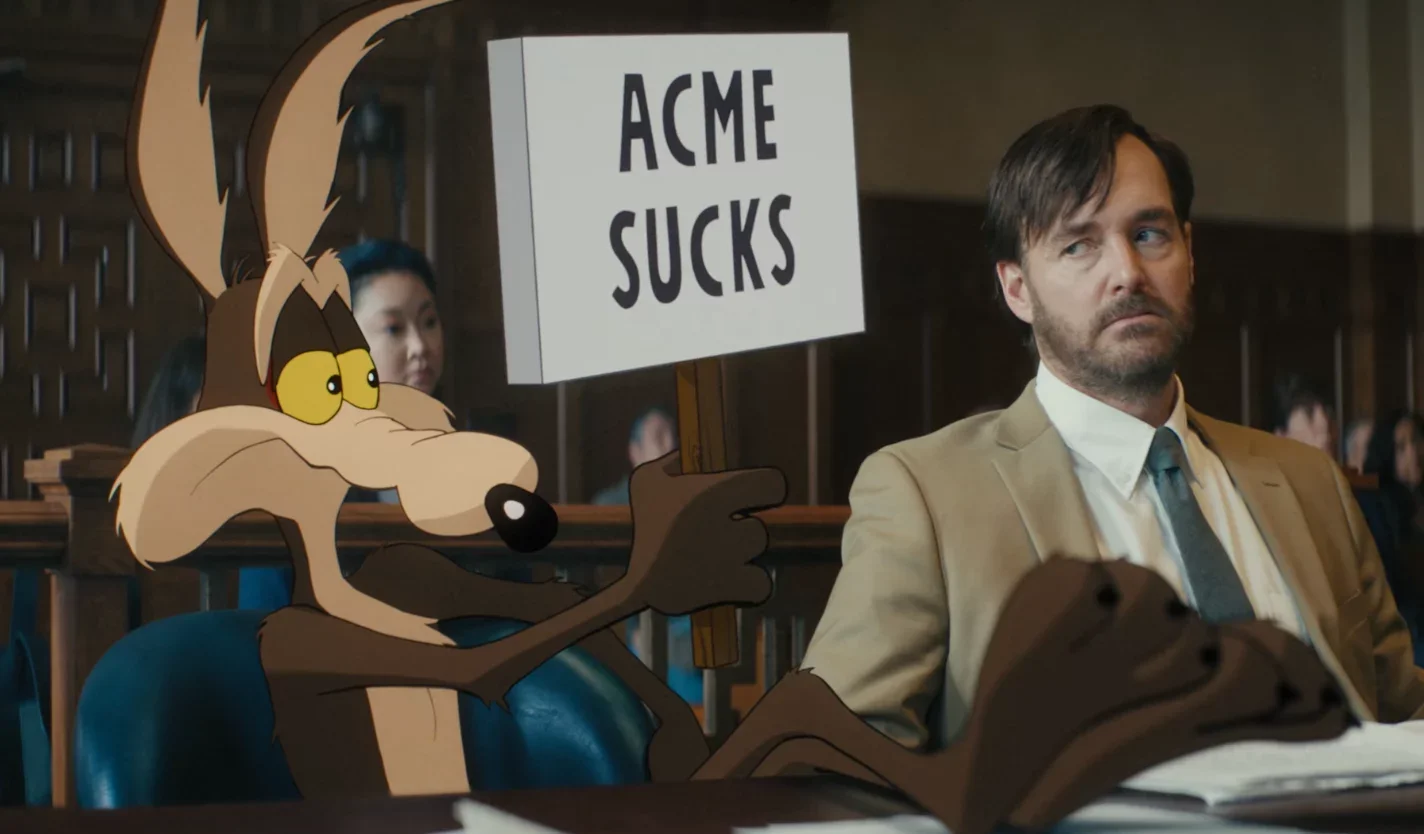
Out of all the characters in the Looney Tunes universe, Wile E. Coyote and Roadrunner are arguably two of the most iconic and funniest. Their short cartoons starting with Fast and Furry-ous depict the Coyote trying to catch the Roadrunner with insanely absurd plans and Acme products that almost always backfire. They’re simple cartoons and yet they’re some of the funniest in the IP. Apart from short appearances in other Looney Tunes shows and movies, is there other potential is there for this animated duo? Yes, and it first arrived in the form of a 1990 New Yorker parody article.
Coyote vs Acme, the article by Ian Frazier, follows Wile E. Coyote suing the Acme corporation for all their faulty products he’s used. Sounds like a perfect movie idea, right? However, like the Coyote’s pursuit of the Roadrunner, the path to adapting the article for the big screen was a tumultuous journey. From the rights being optioned and lapsed in the late 90s and mid 2000s to James Gunn pitching the film in 2015, official development was eventually announced in 2018 with principal photography starting in 2022. But just when the film completed the following year, disaster struck: Warner Bros. officials shelved the project as a tax write-off. There was obviously a rightful outcry against the decision from the team who worked on the film and the general public. As a film lover myself, I wholeheartedly agree that Warner Bros’ decision was abhorrent; no completed film should be locked away never to be seen whatsoever. But luckily, a silver lining came in the form of small distributor Ketchup Entertainment, who bought the rights to the film and is releasing it in theaters this month.
And after all that hard work of getting the film out there, how is it? In my opinion, it is by far the best film in the Looney Tunes IP.
Coyote vs Acme (the film) is directed by Dave Green from a screenplay by Oscar nominee Samy Burch and story by Burch, Gunn and Jeremy Slater. It follows the same basic plot as the New Yorker article three decades ago: Wile E. Coyote sues Acme for their dysfunctional products. On Coyote’s defense is weary billboard attorney Kevin Avery (Will Forte) and his eager intern/niece Paige (Lana Condor). On Acme’s defense is top lawyer Buddy Crane (John Cena) and powerful executive Foghorn Leghorn. In the midst of the escalation from a small court to a congressional hearing, a dark conspiracy looms that involves both Acme and the other Tunes.
As you can probably infer, the film is a blend of multiple genres: action, comedy, mystery and more. It’s able to balance the silliness of the animated Looney Tunes antics with the real-world legal jargon and mystery in a very Roger Rabbit kind of way. Not only that, the world uses both aspects as opportunities for jokes that further the story. Whether it’s attempting to subpoena the Roadrunner or a scene involving whistleblower Bugs Bunny, the Looney Tunes gags are just as hilarious in these real-world contexts as they are in simpler cartoons. On the other hand, there’s a lot of heart and pathos felt for the Tunes. Wile E. Coyote himself is not portrayed as a dastardly villain nor the butt of a joke, but as a Sisyphean underdog who keeps persevering against overwhelming odds. It’s a clever recontextualization of the character and the cartoons, both treated by the film and its protagonists with utmost respect. Even in small sight gags or easter eggs (notably Avery and his firm Avery, Jones & Maltese) does the film revere the IP.
The film also manages to portray that theme of perseverance through the case itself, where Coyote and Avery are the “little guy” against the mega Acme corporation. It allows the audience to sympathize with Coyote’s team and give them character development (particularly for Avery). Plus, it cleverly commentates on the state of giant corporations and how immoral or unethical they tend to be. Intentional or not, Acme can be seen as a tongue-in-cheek metaphor for Warner Bros; the opening WB logo literally has a footnote calling it a subsidiary of Acme. In terms of the animation, the Tunes are mainly 3D and cel-shaded with a few bits of 2D animation for minor scenes, but overall it’s very fluid. Admittedly, some of the Tunes don’t translate too well to 3D – Elmer Fudd and Foghorn Leghorn look particularly uncanny – but most of the characters look great. You can tell there was a lot of care put into animating Coyote and Roadrunner.
In conclusion, Coyote vs Acme is a hilarious and heartfelt underdog story about Wile E. Coyote and his undying perseverance in the face of failure. I implore anyone who advocated for the release of the film years ago to buy a ticket and see it in theaters. Support the team.
