Tribeca Festival 2026, Part 2
Note that due to the amount of film listed, the reviews may be shorter than usual. Anyway, here are the films that I saw during this year’s Tribeca Festival on June 8-10:
The Long Haul — June 8, 3pm, Village East by Angelika
The Leader — June 8, 5:45pm, Village East by Angelika
Lucy Schulman — June 8, 9:15pm, Village East by Angelika
In Memoriam — June 9, 2pm, Village East by Angelika
Killing Castro – June 9, 8pm, BMCC Tribeca Performing Arts Center
Only What We Carry – June 10, 2pm, Village East by Angelika
In the Hand of Dante – June 10, 8pm, AMC East 19th St.
[SPOILERS FOR ALL FILMS INVOLVED]
The Long Haul
⭐⭐⭐
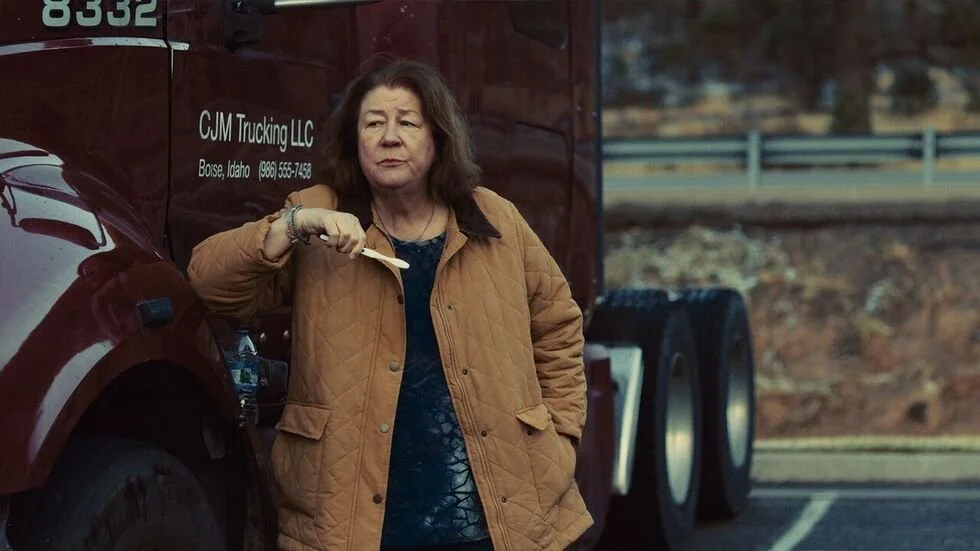
Surprisingly, this is the second film I've seen at this festival that covers grief as a theme.
The Long Haul is the directorial debut of filmmaker and photographer David Drake. It stars character actress Margo Martindale as well as Cole Sprouse, Stephen Root, Jefferson White, and Oscar nominee Yalitza Aparicio.
CJ (Martindale) is a lonesome long-haul trucker always on the road looking towards the next task from her boss and his young social-media-obsessed son Junior (Sprouse). When she receives a parole letter stating that the man who killed her daughter is getting a hearing, CJ is further haunted by those memories and in spite of her attempts to run away from them, she must ultimately face the past through making a statement.
To state the obvious, Martindale is the shining star. Her performance of a broken woman is one for the ages. Like many other Martindale-played characters, CJ feels like the grandma you have had or never had; she definitely has some no-nonsense sass veiled over her grief. And then there’s exactly that. The times CJ gets depressed over her daughter, you feel just as hurt as she does. The endlessly barren landscapes of western America used to represent CJ’s loneliness are truly picturesque. CJ’s statement at the hearing towards the end is a sequence that will grip you till it ends. Honestly, The Long Haul works best as a broken character study. Sadly, it’s the only thing that works best.
Everything outside of CJ and her personal story is what brings the film down from great to decent. The story is shown as these loosely-connected subplots that, with exception of the hearing, wrap up too quickly and therefore none of the other characters get as much depth as they should. Her subplot with Junior, who invites her on a haul to Las Vegas even though they don’t get along together, ends after 20 minutes. Another with Aparicio’s character, a young Latina woman CJ saves from an altercation, ends in half that time. The intention is well and understandable, but the execution is not.
Overall, The Long Haul is emotionally deep as a character study of a grieving trucker but not as much elsewhere. But at the end of it all, The Long Haul asks us this: how do we deal with grief after trying to outrun it? It’s the same answer to a similar question asked in the film, “What’s the point of a road if there’s no end to it?”
The Leader
⭐⭐⭐½

Back in Tribeca Festival 2024, I watched the historical crime drama McVeigh, which detailed the life of extremist Timothy McVeigh leading up to the 1995 Oklahoma City bombing. Quoting my Letterboxd review, I said that the film was “a black hole of interest” that failed to deliver on the thrills and tension of an intriguing true story. Luckily, that isn’t the case with this year’s dark true-crime thriller: The Leader.
The Leader is a thrilling historical drama written and directed by Michael Gallagher, perhaps best known for the YouTube original film The Thinning (yes, the one starring Logan Paul). Unlike that, The Leader stars professional actors including Tim Blake Nelson, Vera Farmiga, Jim Parsons, Simon Rex, and Grace Caroline Currey.
The biopic recounts the rise and fall of the cult Heaven’s Gate, who in 1997 committed the largest mass suicide on American soil. We observe it through the perspectives of its titular leader Marshall Applewhite (Nelson), co-founder Bonnie Nettles (Farmiga), and some of its members (Parsons, Rex and Currey). The story is non-linear, constantly bouncing from year to year. 1972, Applewhite and Nettles meet and start the cult. 1975 and 1982, the cult expands. 1979, Nettles gives an interview. 1985, she dies. And 1997, the mass suicide. It does become unfocused when you see (and in some cases, must remember) something from one year before it cuts to the next.
While it sort of humanizes the cult, in no way does The Leader endorse any of their actions or behaviors. Applewhite and Nettles are people who have gaslit, manipulated and deluded others into abandoning their families and freedoms for promises of heaven. When these members in the cult are punished for rule-breaking, it results in some physically and psychologically disturbing consequences often caused by gaslighting. As a matter of fact, one of the main themes is how easy religion and cults manage to brainwash people through preying on their desires. Any emotion the film wants to wring out of you for these characters is pity because despite them being so far off the deep end that it gets them killed, these are ultimately real (or based off real) people.
The strong suit though is visual and narrative juxtaposition. Gallagher pairs the absurdity of this cult’s delusions with how terrifying those delusions grow. Towards the end, the film cuts from old digital recordings of Applewhite and the hopeful “Exit Class” of Heaven’s Gate to their dead/dying corpses. Furthermore, the film has a smash cut ending so insane it rivals that of 2019’s Saint Maud. Granted, some of these juxtaposed cuts are too jarring and it becomes a little annoying when the unsettling ambient score constantly cuts in and out for a line of dialogue.
Another highlight is the acting. As Applewhite, Tim Blake Nelson is an intense force to be reckoned with. His quiet unemotional cadence is almost enough to make the figure convincing in his delusions and the make-up done on Nelson makes him almost unrecognizable. On the other hand, Vera Farmiga matches that level in a different sense as Nettles, portrayed as the mother figure to the cult. Farmiga shows much more emotion than Nelson, especially when Nettles realizes she has cancer and all of her regrets start catching up. As far as the Heavens Gate members go, Parsons stands out the most for his dramatic performance; plus his character has the most of an arc as he slowly breaks away from the cult.
The Leader, although not nearly as extreme or coherent as it should be, is extreme nonetheless in its absurd and bleakly disturbing portrayal of a cult leader and his flock. It will stand out and stick with you long after the credits roll whether you’ve enjoyed it or not.
Lucy Schulman
⭐⭐⭐½
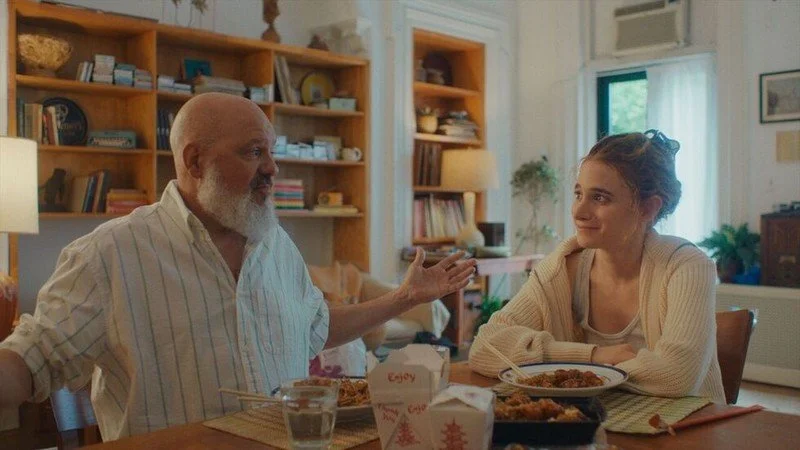
What writer/director/star Ellie Sachs opens on in her directorial debut is…mallard ducks. These birds, through her narration of this memory, were the childhood obsession of the film’s eponymous protagonist (Sachs) whenever she went to the park with her single father (David Cross). Not only does this opening sequence foreshadow the personality of Lucy Schulman the character, but it’s an immediate and to-the-point introduction to Lucy Schulman the romantic, funny, and human film.
Lucy Schulman is written, directed by and starring Ellie Sachs. Apart from her and Cross, the film co-stars Thomas Mann, Annabelle Atanasio, and Hasan Minhaj. It follows the eponymous character, a bookstore employee who briefly moves back in with her dad after another break-up. From there, she attempts to juggle her responsibilities (notably planning her best friend’s bridal shower and a shot at an editorial job), but a blossoming relationship with artist James (Mann) might throw her life into disarray.
Right off the bat with Lucy’s neurotic narration and brightly-colored establishing shots of New York, Sachs mimics a romcom style not too dissimilar to that of Nancy Meyers and Nora Ephron. Hell, Lucy herself is reminiscent of Diane Keaton in Something’s Gotta Give or Meg Ryan in Sleepless in Seattle. But under the romcom veneer, Lucy Schulman is ultimately about examining relationships, why you are the way you are, and learning to grow out of that. For Lucy, her internal conflict stems from her relationship issues and over-dependency on loved ones. This can be viewed from the two most prominent relationships in her life (the ones that the film focuses on).
Although the film focuses very heavily on Lucy and James’ romance, it ultimately is the point; Sachs uses that to portray the all-consuming nature of a relationship for those who match Lucy’s flaws. The father-daughter relationship Lucy shares with her dad, who has had her back since she was a child, allows her to reevaluate herself as someone who needs more self-reliance. This is all not to mention that Sachs shares amazing chemistry with the comedically-light Cross and the easygoing Mann.
Speaking of which, the best thing about the film is that Sachs doesn’t shy away from making her protagonist flawed. Instead of the typical character vs. character conflict these romcoms love to employ, the conflict instead is character vs. self. Although a little late, the third act consists almost entirely of Lucy coming to realize and self-reflect who she is as she repairs and evaluates her relationships. She’s not a bad person or a bad partner; she just needs to change and improve herself as one. The people around her aren’t bad people; they’re just complicated.
Like the protagonist it’s named after, Lucy Schulman is an easygoing film that offers insights on the connections we make/have and how they shape us. It’s a gem of a New Yorker rom-com that hopefully won’t get lost.
In Memoriam
⭐⭐⭐⭐️
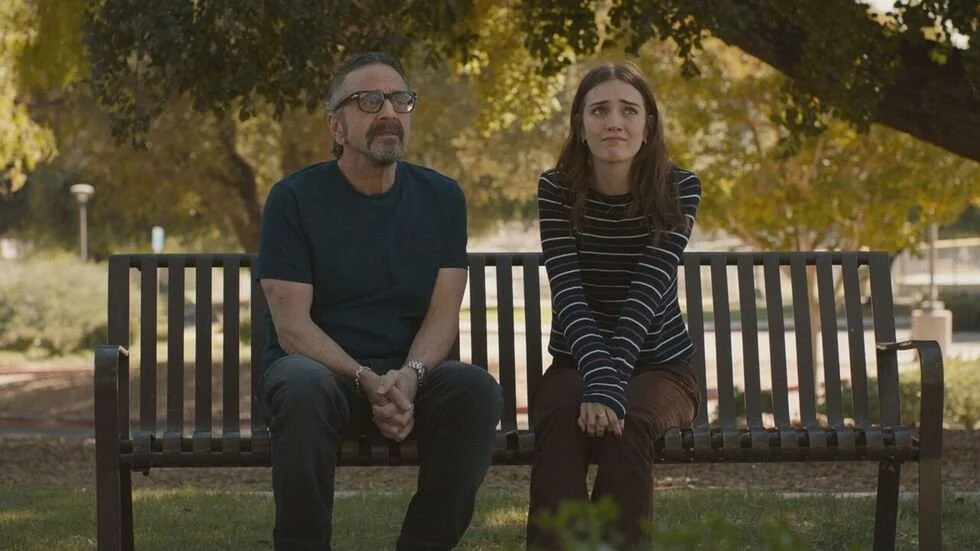
Legacy is a funny thing. You always have a certain way you want to be remembered. But how would you want people to memorialize you and more importantly, who would do that in such a way? This is one of many questions brought up by one of this year’s most emotionally striking films.
In Memoriam is a comedy-drama written and directed by Rob Burnett, who had previously worked on the Netflix hidden gem The Fundamentals of Caring in 2016. This film stars Marc Maron, Talia Ryder, Lily Gladstone, Michael McKean and Judy Greer.
Langston Stanfield (Maron) is an old egotistic D-list actor, who was once prolific before tanking his career with a cheesy sitcom. When he’s diagnosed with terminal cancer having only six months to live (without chemo), Langston sets out to secure a spot on the Academy Awards’ “In Memoriam” segment. Meanwhile, at the suggestion of his therapist Samantha (Gladstone), he also reconnects with his only daughter Maura (Ryder) from one of many previous marriages. This sparks a dilemma: die in the coming months to get that “In Memoriam” spot or live a little longer (with chemo) to grow his fulfilling relationship with Maura?
The synopsis above should give away how the story plays out and it’s almost exactly how you think it does. The film meanders through the near two-hour runtime with subplots varying in strength and meaning. There’s only so many times that Langston acts like an asshole (and acknowledges it, no less) before it gets redundant. Although to be fair, Maron is undeniably magnetic as a curmudgeon which makes the character much more tolerable.
With In Memoriam, Burnett is very adept at tone. He knows when to make people laugh or make them cry. The comedy stems from its wisecracking dialogue, mainly from Langston, and the situations he gets himself in to be considered. From trying to snag a lead role from popular influencer Jack “J-Stack” Stackhouse (Justin Long, who’s a little old for this but nonetheless hilarious) to running a PR campaign with his agent Walter (McKean) that varying in degrees of success, Langston is dead-set on winning this “In Memoriam” spot in spite of the absurdity the situations are. However, this brings me to the other side of the coin.
The emotional dramatic core of the film comes from its main theme: the importance of connection. It’s primarily shown through Langston’s own connections, new and old, from Walter to Samantha. This is especially the case with the latter, who keeps her therapist-patient relationship with Langston professional despite his unserious charm (plus, Lily Gladstone bounces off Maron so well). The one that shines through them all however is his and Maura’s father-daughter relationship as well as how near-authentic Maron and Ryder portray it. In one scene and later another, the two perform an acting exercise in which they repeat each other’s statements. This is meant to wring different emotions out of them and offer emotional vulnerability between them.
Fans of this kind of sentimental comedy-dramas may adore In Memoriam. In fact, it feels reminiscent of the work of Judd Apatow. Both have stacked casts with stories that balance humor and drama well, even when they manage to be quite long for their own sake. But ultimately in its own merits, In Memoriam is a predictable but passionate film about legacy and the people in our lives. A near-perfect mix of comedy and tragedy, because that’s life.
Killing Castro
⭐⭐⭐
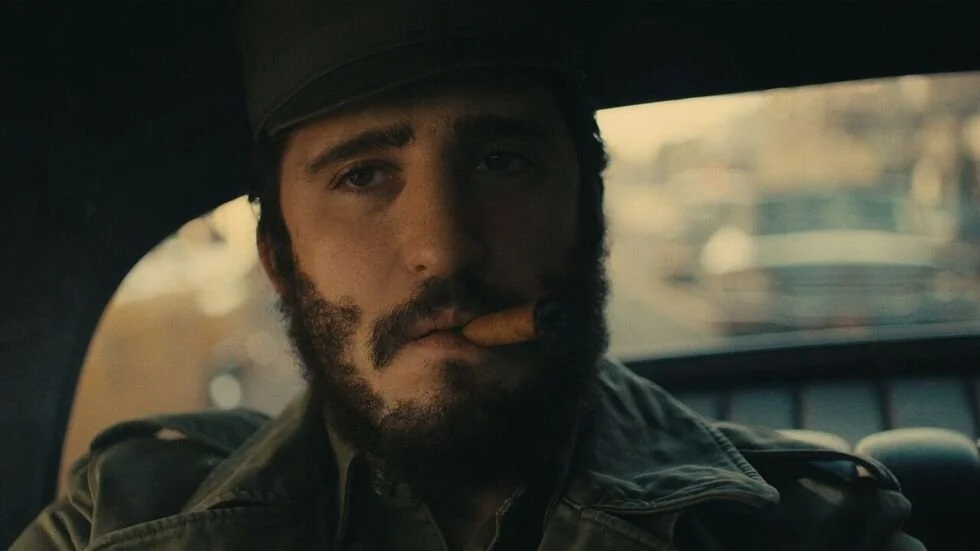
The second sequence of this film depicts an assassination attempt done by a sex worker on Cuban revolutionary Fidel Castro (Diego Boneta). Not only does the scene hook you in and set the thrilling tone, but it also establishes Castro as a resilient cold-blooded power and voice. This would be a great opening scene…if it actaully was that. Put a pin in this for a second.
Killing Castro is a historical drama directed by Eif Rivera and written by Thomas DeGrezia and Leon Hendrix in their debut film. It stars Boneta as Castro along with Al Pacino, Xolo Maridueña, KiKi Layne, Alexander Ludwig, Ron Livingston, and Kendrick Sampson. What is strange though is that one of its executive producers is none other than DJ Khaled.
The biopic recounts Castro’s visit to New York in September 1960 for the United Nations General Assembly, staying in Harlem’s Hotel Theresa at the invitation of Malcolm X (Sampson). The central character the narrative follows is hotel worker Leonel (Maridueña) who becomes Castro’s translator and is roped by two FBI agents (Ludwig and Livingston) into getting information of any malintent by Castro and Malcom X towards the country. Meanwhile, the CIA and the mafia, connected together by former retiree Robert Maheu (Pacino), set out to assassinate Castro while he’s in America.
For starters, the film feels largely disorganized in its structure and plots, littered with missed opportunities to make moments stick. That aforementioned scene with Castro and the sex worker happens after a spotty exposition dump about the situation about Cold War era Cuba and why Castro came to New York (dying economy in Cuba due to the revolution and tariffs). Now to be fair, this would be necessary for those who don’t know the history of Cold War-era Cuba, but the same exposition is later delivered by Castro’s brother Raul in a later conversation between him and Leonel at the hotel bar.
On that note, Leonel himself isn’t very compelling no matter how well Maridueña plays him. Anything involving him makes the story much more cliche than it needs to be. He has something of an interesting conflict, that is trying to figure out if what he’s roped into is for a good cause, but it’s lessened by a third act twist involving him. Leonel also has a romance with the hotel manager’s daughter Ava (Layne) that has little-to-no semblance of chemistry. His moments with Castro however are the best parts. Not only do they further explore Castro and his ideals, but also Leonel’s internal conflict. Maheu’s plot, on the other hand, is entirely laughable. Our introduction to him is quite literally the whole “organization pulls best man for the job out of retirement” cliche. Throughout the rest of the film, we don’t know anything else about Maheu; he’s the antagonist and that’s about it. This isn’t helped by Pacino’s drab performance, either.
For some lighter positives, the production design and score are fantastic. The sets and props fit the time period and the score is this very Cuban-inspired slow score that fits for the most part, mainly in the scenes with Castro for obvious reasons. The film also has a very strong theme of resilience and a message about standing up to higher authorities for the underrepresented ones. Here is the film best able to mirror Castro and also make an impact considering the America of today.
Overall, Killing Castro is a film that is just fine when the true story it’s inspired by actually isn’t. The nonfiction book describing the same true story, Ten Days in Harlem: Fidel Castro and the Making of the 1960s by Simon Hall, is a much more captivating experience.
Only What We Carry
⭐½
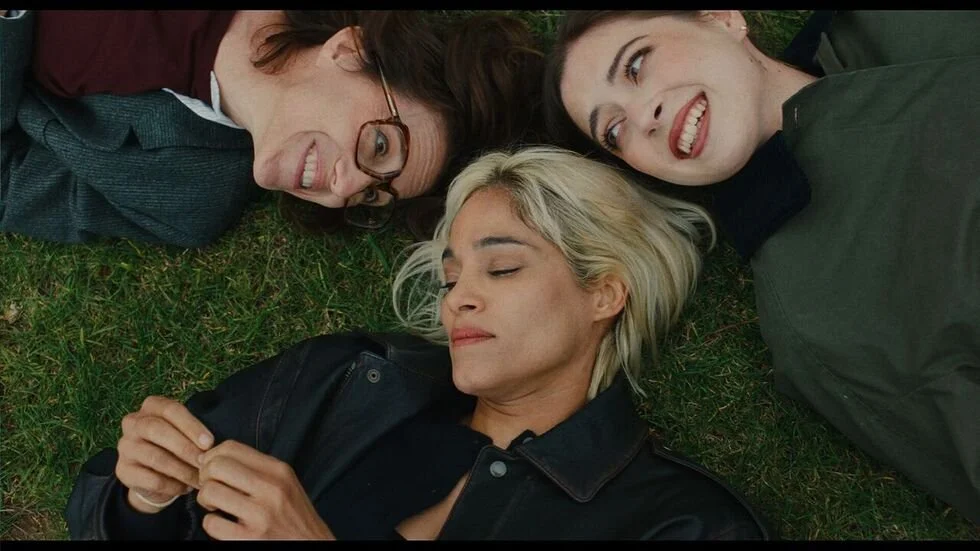
There’s a line of dialogue in the last third of the film that really stood out and it goes as such: “Maybe we have to deal with our ghosts separately.” It’s a tragic and powerful line in a film that is otherwise an unfortunate mess.
Only What We Carry is written and directed by Jamie Adams, who has made other dramas with varying degrees of success. The film stars Sofia Boutella, Charlotte Gainsbourg, Simon Pegg, Lizzy McAlpine, Liam Hellmann, and Quentin Tarantino (an odd casting choice). All six cast members are also credited with “additional material.” Being shot in barely under a week, it’s implied that all if not most of the film is improvised.
The story centers on Charlotte (Boutella), a former ballet student dancing for the Moulin Rouge and generally stuck in life. After reading an article by her estranged ex-instructor turned author Julian (Pegg), she takes her sister Josephine (Gainsbourg) to Normandy to confront him. What starts as that confrontation in a hotel turns into a small-ish getaway at a luxury house owned by Julian’s publisher, an American writer and widower named John (Tarantino). While Charlotte and Julain confront the tension the past left them, Charlotte shares a fling with John. Joining the four are a recently hooked-up couple they met in a bar (McAlpine and Hellmann).
It’s important not to dismiss Only What We Carry as a film where nothing happens, because there is certainly a semblance of a plot in the veil of heavy improvisation. The thing is, the film moves at two speeds: fast or not at all. Contradictory, maybe, but it feels that way when you dissect it. Sometimes the montage of sequences will not let any detail or plot point breath before moving on to the next point, or the tension will just keep going in circles before making little progress. The improvised nature of the film has a lot to contribute to this issue as well as the very exhausting handheld cinematography. The fact that almost every shot is filmed in shaky close-ups is just not visually pleasant.
To get the acting elephant out of the room, Tarantino is not a good supporting actor. He works best behind the camera and in the times he’s in front of it, he’s a bit part in a movie (usually his own) that matches the tone. Throughout this lowkey drama, it becomes very distracting and futile to view Tarantino as an actual character. A scene of him visiting the grave of his dead wife (a carved tree on the property) doesn’t feel as powerful as it should be. It feels less like a widower in conversation with his wife’s spirit and more like Tarantino talking to some random tree. In the hands of a better actor (Paul Dano, maybe?), scenes like this could have made an emotional impact.
As for the others, Boutella and Pegg are the most interesting due to the dramatic tension between their characters. At times, it does seem like they are internally carrying a giant weight. One of the film’s only highlights comes from Julian reading aloud a letter given to him by Charlotte about how he’s made her feel as a dancer and ex-lover; Pegg’s reaction as he goes along makes for quite a poignant performance. Gainsbourg is decent; Josephine is an okay character up to meeting John when she’s then relegated to being a love interest. McAlpine and Hellmann’s characters have little to nothing to do with the narrative and honestly not worth talking about anyway.
In its attempt to provide a theme about regret as the ghost of the past haunting us, Only What We Carry fails at being coherent and impactful. Simply put, it’s weightless.
In the Hand of Dante
⭐️
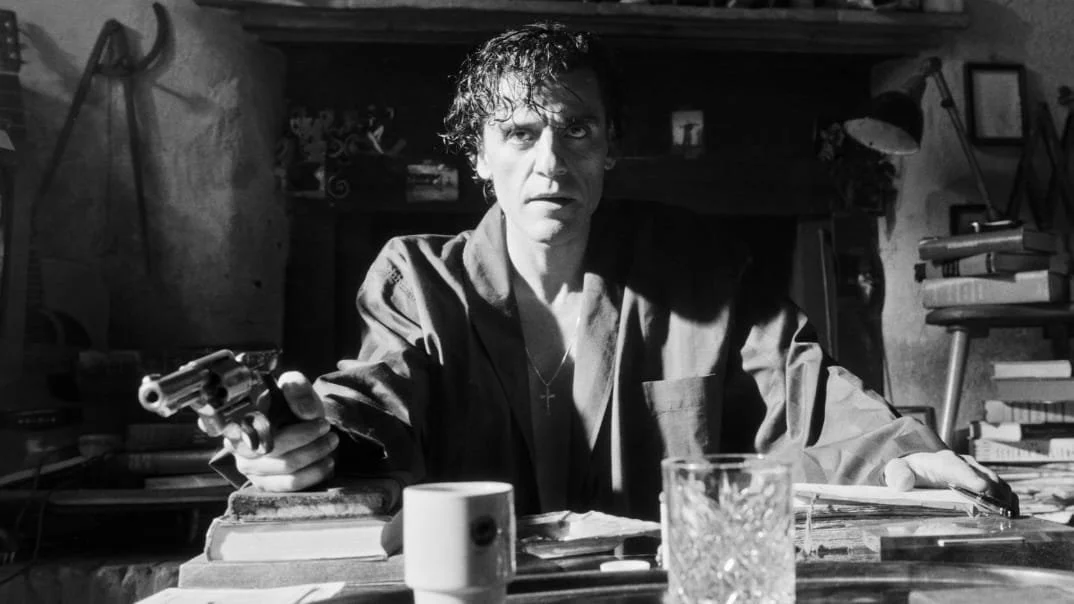
When asked by mafia don Joe Black (John Malkovich) what he thinks of The Divine Comedy, author Nick Tosches (Oscar Isaac) states that he went from loving it to liking it. When asked what happened, he responds, “You look at anything long enough, you see something wrong with it.” Ironically, this statement perfectly describes this two and a half-hour sludge.
In the Hand of Dante is an epic crime drama co-written and directed by Julian Schnabel, best known for artistic historical dramas such as Basquiat, The Diving Bell and the Butterfly, and At Eternity’s Gate. Based on the book of the same name, the film stars Oscar Isaac, Gal Gadot, Gerard Butler, John Malkovich, Louis Cancelmi, Martin Scorsese, Al Pacino and Jason Momoa. It had its world premiere at the Venice International Film Festival last year, although a screener copy had leaked online before. It will be officially released on Netflix on June 24.
The film is a double narrative. The main story, set in 2001 New York and shot in black-and-white, follows the aforementioned Nick who is hired by Black and his goons—the violent Louie (Butler) and wormy Lefty (Cancelmi)—to steal and authenticate the original manuscript of The Divine Comedy. Tangibly interwoven is another story set in 14th century Italy and shot in color, in which Dante Alighieri (also Isaac) sets out to complete his magnum opus with help from his mentor Isaiah (Scorsese).
The largest problem In the Hand of Dante suffers from is how pretentious it looks and acts. Schnabel seems more concerned with the illusion of a coherent and profound narrative instead of actually building one. Time is wasted on these admittedly impressive shots that lack the emotional weight to make them hit. This is mostly due to the over-reliance on Nick’s narration, which comes across less like a stream of consciousness and more like him bluntly describing his feelings on a certain matter. The film insists that these segments have meaning instead of letting them flow naturally and the unwarranted runtime makes it more frustrating.
The film clearly wants to mirror the artistic creative world of the 14th century with the greedy modern landscape of the 21st century. Isaac plays artists, Gadot plays their love interests, Butler plays dissenters, Cancelmi plays supporters. But because the themes and characters presented in each are so different and underdeveloped, the connection between them simply isn’t strong enough. Dante and Nick are meant to be reincarnations of each other but the film puts very little effort in making that so. The only two similarities the characters share are being played by Isaac (who is trying his damnedest to make this work) and having lovers played by Gadot (who isn’t).
This is not to mention that many scenes and dialogues that take place in the then-modern world present a lot of missed opportunities or take too long to get to the point. In an early flashback to Nick’s childhood, he confesses to his uncle (Pacino) about killing another boy in self defense and the uncle keeps the secret while mentioning that God also knows and forgives (omniscience and such). This could have been a decent set-up for Nick’s inner conflict with divine morality and violence, but like Pacino in this bit part, it abruptly ends and is never heard from again. Louie’s meandering tangents are meant to establish his violent unpredictable character but take forever to get to that point. Jason Momoa’s subplot—in which he plays as a sadistic Italian gangster who goes after Nick for stealing the manuscript—is not entirely meaningless but it drags out an already bloated story; plus, Momoa’s faux accent is enough to make an Italian’s skin crawl.
The more interesting parts–ones that sadly happen far and few in between–are Dante’s segments, where the real meat and potatoes of the story lie. Somewhat like with Van Gogh in At Eternity’s Gate, Dante struggles to finish the project while dealing with personal issues with his wife Gemma Donati. It sparks an interesting message about the creative process and the legacy you want to leave behind and somehow manages to keep it up. Dante’s conversations with Isaiah are the closest things to authentically profound. The film could have been better had these segments been given the development they needed. The only other gripe is the constant use of subtitles with the clearly-audible 14th-century English language, which makes certain conversations distracting.
If you have not yet watched a film by Julian Schnabel and plan to, I implore you not to start with this no matter how easily accessible it will become. There are better options.
