Resident Evil
★★★★
Earlier this summer, I started playing both remakes of Resident Evil 2 and 3 as well as bits of 7 in my spare time. All three of them are absolutely spectacular, combining a great survival story about a hero against a horrifying zombie apocalypse (or an everyman in a horrifying family scenario in RE 7’s case) with compelling puzzles and a smooth third-person gameplay. Leading up to the release of this film, I decided to watch some cinematic adaptations of the game, notably Paul W.S. Anderson’s 2002 film and the more direct Welcome to Raccoon City. Both of them were not very good; the 2002 film is campy in an uninteresting way while Welcome to Raccoon City is a painfully boring bastardization.
But sometimes, the eighth time’s the charm. And in this case, the eighth time adapting Resident Evil for the big screen (after the six Paul W.S. Anderson movies and Welcome to Raccoon City) worked.
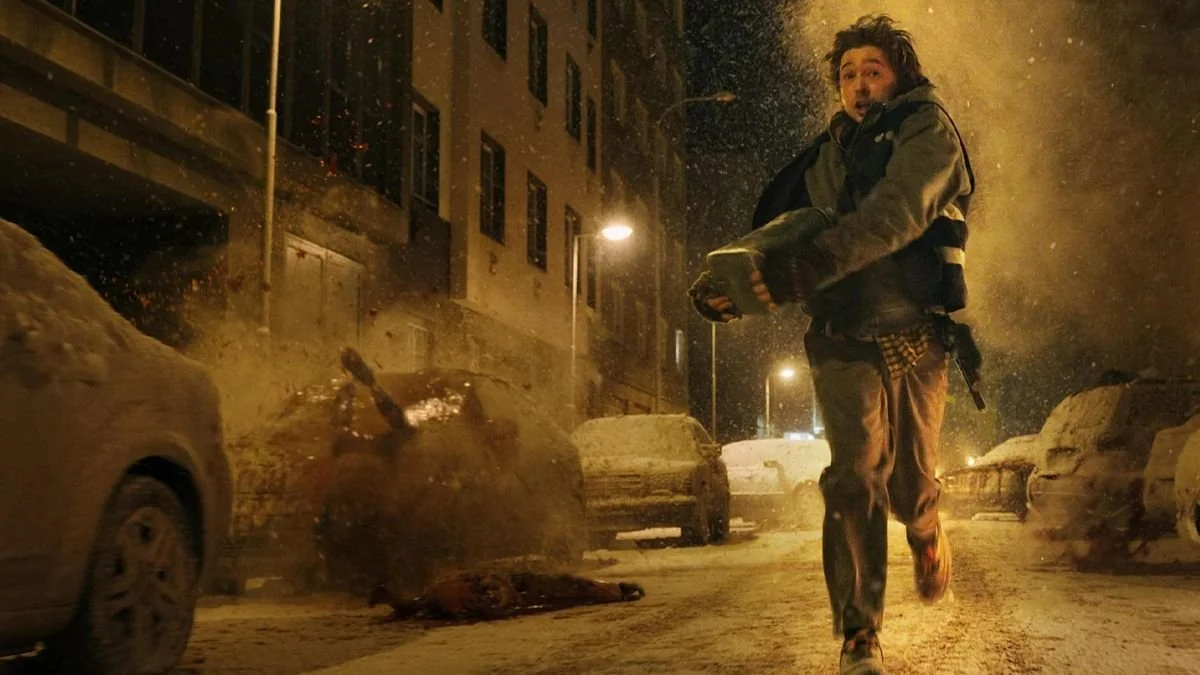
Resident Evil (2026) is the third solo directorial effort from sketch comedian turned horror filmmaker Zach Cregger. It stars Austin Abrams – his second collaboration with Cregger after Weapons – and co-stars Paul Walter Hauser, Zach Cherry and Kali Reis. The film follows Bryan (Abrams), a medical courier who takes a last-minute, double-paying delivery to Raccoon City, but what should be an easy gig morphs into a horrifying fight for survival against infected monsters.
On its own merits, RE ‘26 is great. As a filmmaker, Cregger knows how to craft moments to laugh at just as much as moments to keep one on edge. Make no mistake, this film has some really gory and splattery body horror, but it’s also jam-packed with corny Leon Kennedy-like one-liners and other comedic moments to balance the tone. The visual effects are also decent for the kind of things that go on in this survival zombie horror movie, but they diminish in quality as the film continues. Additionally, the third act is too abrupt and underdeveloped to stick – a criticism I’ve had with Cregger’s Weapons and Barbarian – but it’s a bittersweet one and it manages to either make room for sequels or stay self-contained. On the other hand, Bryan is a fantastic protagonist because of his hapless everyman personality (which sets him apart from other RE protagonists like Leon or Jill but not too unlike Ethan) and Abrams is perfect for that kind of role. The fact that the film entirely focuses on Bryan – with brief interactions from scene-stealing characters from Hauser’s Umbrella representative to Cherry’s clueless scientist – also helps in getting the audience to care about his messed-up scenario.
As an adaptation of the games, the film – again, the eighth total film in the franchise – has little-to-nothing to do with the other movies and games’ existing story/characters. But keep in mind that this is an adaptation and my standards are these: 1) make a good movie first and a good adaptation second and 2) don’t do a 1:1 beat-for-beat translation but be able to understand the main point and essence of the source material. But I digress; back to RE ‘26. Cregger, who is a fan of the franchise himself, has created a fresh perspective in the universe that’s also a love letter to those games in more ways than one. It’s not just in the overt visual references to items such as the save-your-progress typewriter or the pesky symbolled padlocks, but also in the way it makes you feel as though you are experiencing a gameplay of Resident Evil. If you’ve ever played the games, you can probably relate to how much Bryan swears to himself or gets freaked out from the creatures or misses easy shots – I know I can. And even if you weren’t a player, it makes sense for the character and the story.
The film also nails environments. There are lots of settings, whether it’s a farmhouse in the middle of nowhere or a spooky dark tunnel, that heighten the tension the film maintains. Not only that, but they seem like locations you would find in a Resident Evil game, with its cinematic obstacles feeling like puzzles. The cinematography by Dariusz Wolski is equally effective. It’s very dynamic; plus, the first-person shots and the way the camera would look around the area feels incredibly immersive.
In conclusion, Resident Evil (‘26) is one of the best video game adaptations to date, let alone in the Resident Evil franchise. It’s a gory delight with a great balance of horror and comedy as well as some slight setbacks, but another solid addition to Cregger’s growing filmography. Fan of the games or not, I’d very much recommend watching this.
