Bo Burnham: INSIDE
In 2006, a 16-year-old boy with a keyboard in a small bedroom posted a quirky comedy song onto YouTube. This boy was Robert “Bo” Burnham. In the 20 years since, from albums to comedy specials to films and television, Burnham has become an iconic artist amongst millennials and early zoomers. On May 30, 2021 – five years ago today – his magnum opus released.
Bo Burnham: INSIDE (for the sake of brevity, just INSIDE) was released at a time when the pandemic was still fresh in the public’s mind. And in a way, it’s an integral factor for the film’s critical and commercial success. Filmed entirely in a guest house and just under an hour and a half, Burnham managed to capture almost every feeling everyone felt during the long painful year that was 2020, which can be properly summed up as everyone losing their minds stuck in their own homes. And this couldn’t be better reflected not only in its spectacular soundtrack but also its brief skits in between songs. Five years later, long into a post-COVID world, INSIDE still stands as both the best pandemic film of its time as well as one of the best films of 2021.
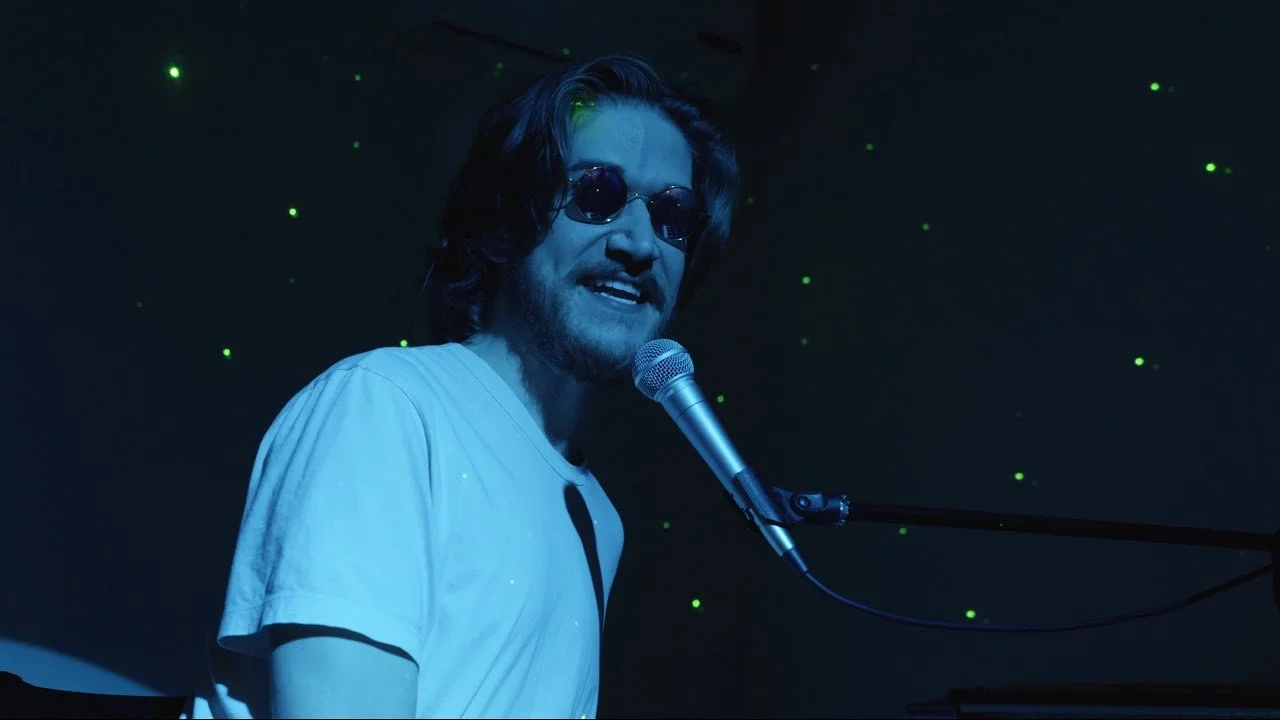
Burnham in “Welcome to the Internet”
Burnham’s style of comedy is one that is self-deprecating, satirical, witty, and deeply emotional all at once. Each song and skit contain at least one of these characteristics that mesh well into an enjoyable or contemplative song. Altogether, they create timeless catchy songs that take a playful jab at whatever (or whoever) the subject is. Take what many would consider the most popular song “Welcome to the Internet.” Playing a quirky caricature of the titular Internet, Burnham dives into the complexities and addictiveness of the online world (“Apathy’s a tragedy and boredom is a crime”) as well as how simpler it used to be. Under the surface however, the song is a weirdly-prophetic look at how advanced technology will doom people, hinted by Burnham’s villainous laugh before the ending chorus.
Another excellent example of an impressively aged song is “How the World Works,” an upbeat Jim Henson-like tune between Burnham and Socko – a literal sock puppet on his left hand. In spite of the happy tune, the song is a cutthroat critique of the ruling upper class’ performative activism and control over the lower working class. Burnham, representing the former, keeps a simplistic first verse while Socko, the latter, spits harsher truths in a second verse. For Burnham’s “The secret is: The world can only work/When everything works together,” there’s Socko’s “Don’t you know? The world is filled with blood! And genocide! And exploitation!” The climax is a heated spoken-word conversation between the two, which results in Burnham almost “killing” Socko – removing him from his hand – and subsequently scolding him like an insolent child (“Are you gonna behave yourself?” “Yes.” “Yes, what?” “Yes–” “Look at me.” “Yes, sir.” “That’s better.”). Keep in mind that the music stops during that exchange before returning to the cheery chorus as though nothing happened. Again, this serves as a clever metaphor for social class relations. Socko being a puppet should already give it away.
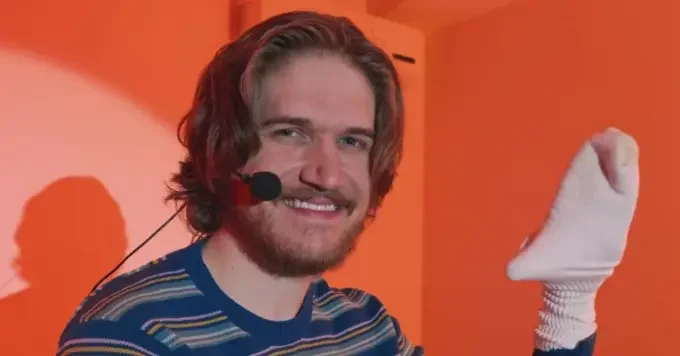
Burnham and Socko in “How the World Works”
It’s important to note that INSIDE is much more than a comedy special – the fact that it’s labelled so can arguably be viewed as a Trojan Horse. Inside that is a nuanced account of one person’s mental decline during a tumultuous year. Case in point: the film’s structure. The first half of INSIDE is jam-packed with upbeat melodies with playful stabs of the world today with the exception of the slow-paced personal “Look Who’s Inside Again.” “Bezos I” is a short synthetic track with an incredibly catchy chorus while “White Woman Instagram” pokes fun at the stereotype through a collage of aesthetic images you would find on one. “Sexting” is a bedroom pop satire of dating in the digital age with some fun use of emojis (“You send me a peach/I send a carrot back/You send a ferris wheel/That’s pretty abstract”).
By the exact halfway point, where Burnham celebrates his 30th birthday with the song “30” and ends it with “2030, I’ll be 40 and kill myself then,” the film takes a darker, personal turn. Throughout the second half, songs such as “That Funny Feeling” or “All Eyes on Me” reflect Burnham’s depressive mentality. Before the latter song starts as a matter of fact, he briefly states “I am not…well…” before breaking down into tears. Whether this is an act or real or both is debatable, but the way Burnham is able to communicate these strong feelings speaks volumes. Moreover, it’s a staggeringly accurate depiction of depression and poor mental health. The song “Shit” quite literally describes the actions and feelings of such.
At this point, you can infer that INSIDE is not your typical comedy special, especially in part because there is no live audience. Burnham is completely alone on this “stage,” but it provides a freer ability to use cinematography as a visual language. There are multiple shots where he is surrounded by the large empty space of the guest house or surrounded by multiple wires or lights. There are other moments when he utilizes close-ups to create some connection to the audience. One of the most iconic frames of the film comes from the climax “All Eyes on Me,” which starts with a super close-up of Burnham’s tired eyes staring directly at the camera. Additionally, towards the end of the song, he grabs the camera and swings it around, symbolizing not only the audience “get[ting] on out of [their] seats,” but also his downward spiral.
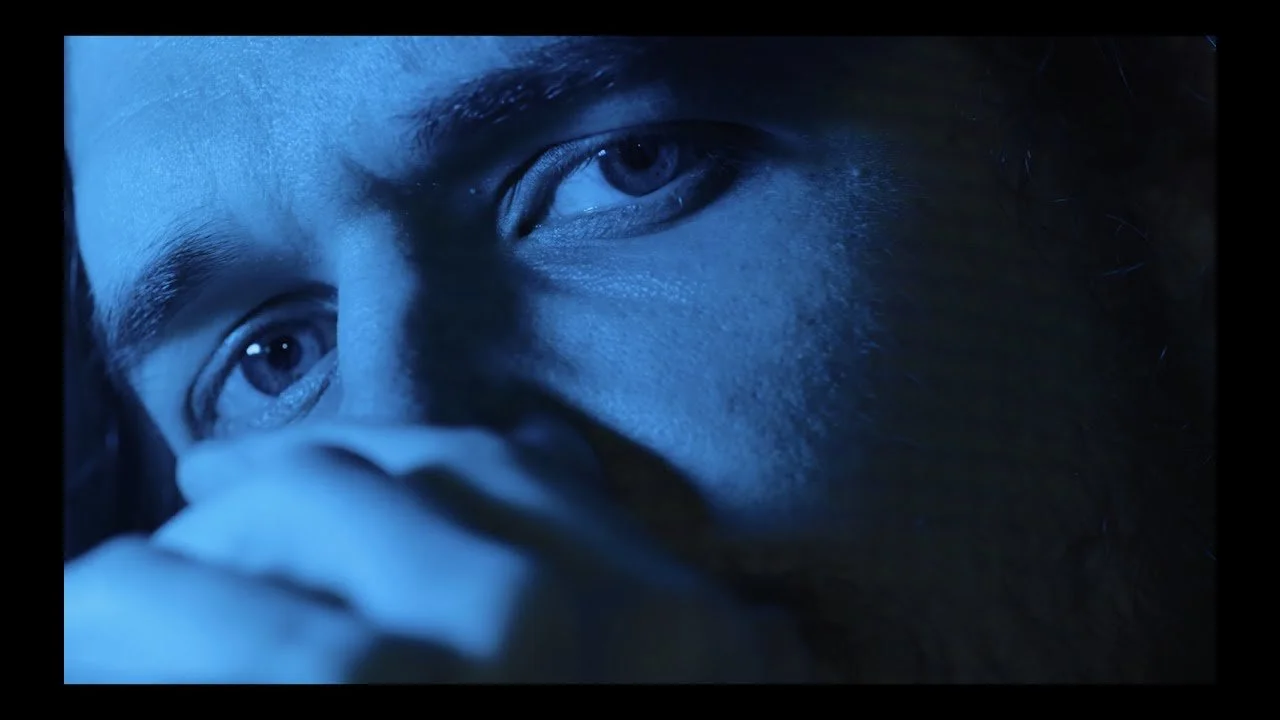
Burnham up close and personal in “All Eyes on Me”
INSIDE concludes with a simple yet profound piece of meta-commentary. Burnham walks out the finally-open door with a giant spotlight on him. Sound effects of a cheering audience take over before morphing into canned laughter as Burnham desperately tries to get back inside. However, this is revealed to be a projected video as Burnham, inside, watches with a smile creeping onto his face as the film cuts to black. This ending on the surface can be viewed as something dark, but there is more nuance to it.
Since the release of this film and the subsequent INSIDE Outtakes as well as of the publishing of this review, Burnham has barely if not hasn’t worked on anything new. With that being said, the message is not about retreating to the comforts inside your space, given how much his prolonged isolation destroyed him mentally. However, when we see Burnham watching the video, his smile doesn’t seem sadistic but rather…cathartic. What Burnham is ultimately trying to communicate, the core and timelessness of this one-man odyssey amidst the pandemic and the depression, is art. It shows the emotions of creating art, all the ups and downs of the process.
And letting it go knowing that maybe, just maybe, all the turmoil was worth it.
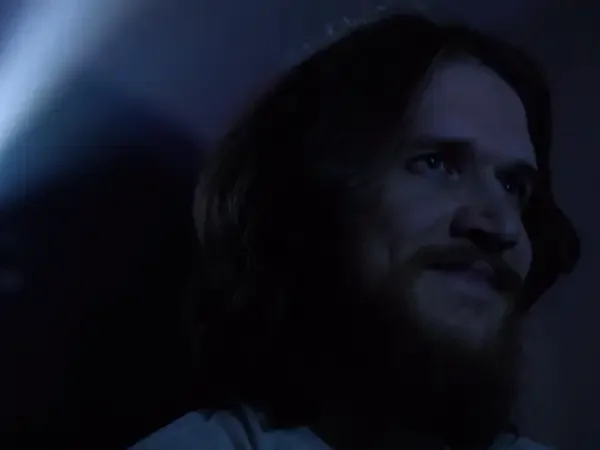
A smile of catharsis
RATING: ⭐⭐⭐⭐⭐
