You Can See Everything
★★★★★
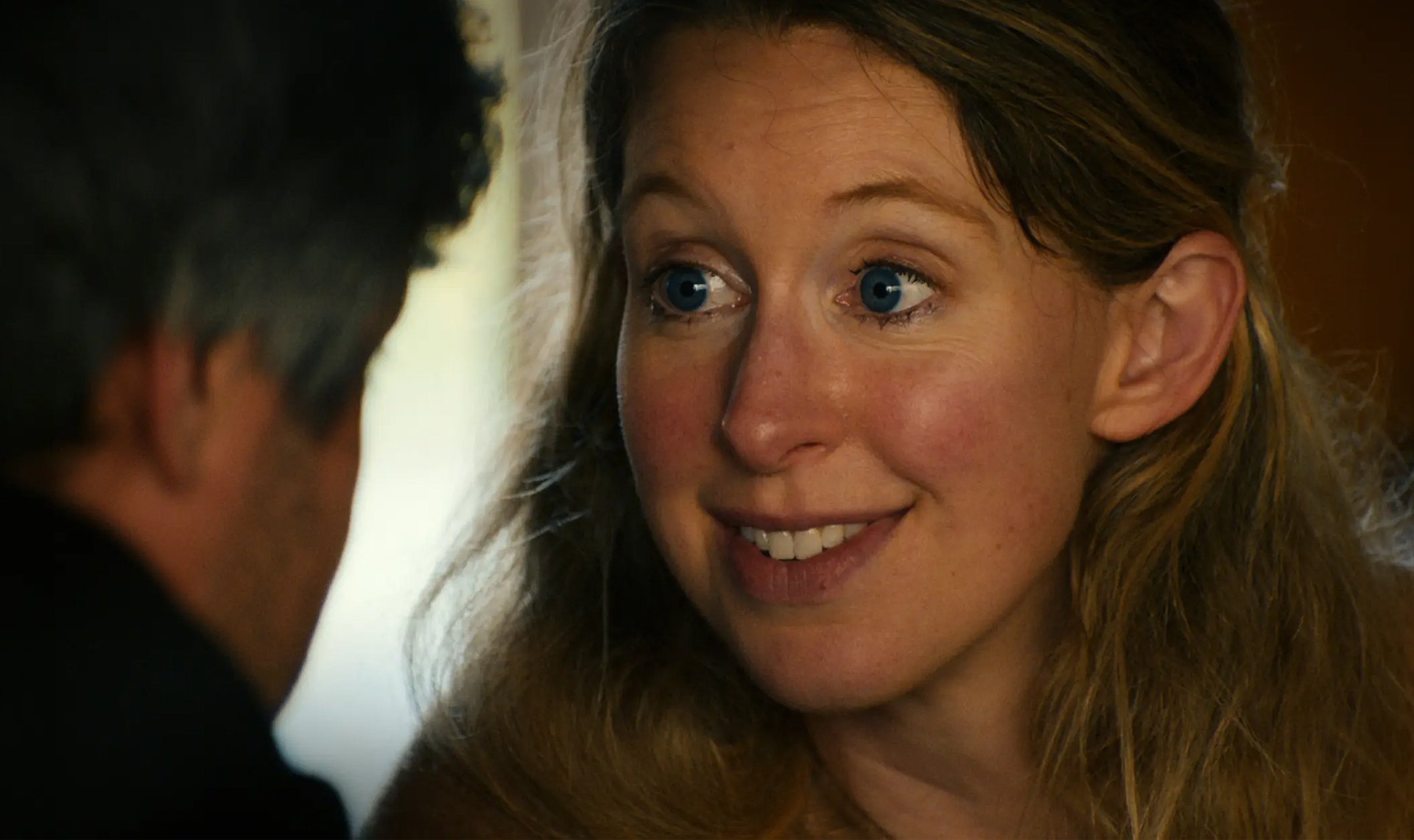
The former CEO and founder of the now-defunct pharmaceutical company Theranos, Elizabeth Holmes is best known as a fraud who swindled millions out of investors for faulty products and is publicly perceived as a liar. The showrunner of critically acclaimed series such as Nathan for You and The Rehearsal, Nathan Fielder is best known for his psychological explorations of the human condition through simulations and other eccentric tactics. The filmmaker behind several documentaries and more recently the biopic Primetime, Lance Oppenheim is best known for intimately exploring the odd lives of people with warped senses of self.
So what happens when all three people are involved in a three-hour project shot in secret over the past couple of years? Three words. Complete. F**king. Insanity.
You Can See Everything, produced and directed by Fielder and Oppenheim, had a secret screening at this year’s Telluride Film Festival and is currently in theaters nationwide. It centers on Holmes and her partner Billy Evans, who invite the filmmaking duo to document their private life before she’s sent to prison. What starts as a 34-day project develops into a three-year deep dive into her persona, all with a heavy dosage of ambiguity. The film is divided into two halves – the first of Holmes’ brief time before incarceration, the second of Fielder’s attempts to deconstruct his time there and determine whether or not Holmes was being deceitful.
I am aware that I throw the word around quite a bit, but for lack of a better one, this film through and through is unique. Really, off the top of my head, I don’t think I’ve seen anything quite like it nor have I seen anything as thought-provoking. The deeper you get into this film and even after it, the more you start to question where the facade ends and the truth begins. Is Elizabeth Holmes just a puppet in the hands of her delusional megalomaniacal partners? Or is she actually the puppeteer, completely aware of all her fabrications and yet doubling down on them to fit her own delusions? Furthermore, is Fielder really able to dive deep into who Holmes and Evans are or is he leaving things out for reasons other than legality? Basically, it’s able to stir questions about your perception of these topics – something both Fielder and Oppenheim excel at – and allows you to make your own interpretations of these relatively unclosed themes of truth vs deceit.
The film’s title is a gigantic paradox, in that you can see what Holmes insists is her true self and yet you feel as though you are barely scratching the surface. Her body language and facial expressions – mostly consisting of doe-eyed smiles and nods – can easily present her as this innocent human being before you start to realize it could be all an act for sympathy. Even Evans is guilty of being just as much of a master manipulator as Holmes, if not more; at several points in the film, he insists certain conversations go off camera and unrecorded. In Fielder’s determination to uncover the truth and try to make sense of Holmes and Evans’ statements, even he finds himself questioning the reality of it all. In one attempt to convey his feelings about her confusing statements about Theranos, Fielder shows and explains the classic “Who’s on First” skit as an analogy to which Holmes doesn’t understand the connection let alone the joke (intentionally or not). Even in the film’s second half, set two years after Holmes’ incarceration, does Fielder struggle with peeling the layers of Holmes’ deceitful persona. Now I won’t spoil much because this half is incredibly surreal and unpredictable, but know that it is so in the same way that The Rehearsal is.
Visually speaking though, the film does a perfect job at accentuating that paradox. The square aspect ratio instead of the standard widescreen one conveys a feeling of confinement and secrecy as though there’s something beyond those black borders. The use of close-ups and zoom-ins convey intimacy yet a looming sense of dread. Even when it’s just images shown on a screen, you feel as though you’re in the room with Fielder and Holmes. Even when they’re not looking towards the camera, you can’t help but feel the figures’ persistent eye contact staring directly into your soul. It’s a masterful way to build tension and intrigue; the film’s iconic scene in which Holmes asks Fielder “Why would I deceive you?” is nothing short of perfectly uncomfortable.
In conclusion, You Can See Everything is all at once inquisitive, open-ended, thought-provoking, uncomfortable, and a masterpiece of a documentary. It is as of the publishing of this review my favorite film of the year and one that won’t leave my consciousness for a very long time.
